Everyday Nutrition
Mapping the Rhythm of a Balanced Plate
Eleanor Whitfield··10 min read
London, February 2026 — The daily water record is one of the quieter columns in any food journal. It sits alongside macros and portion notes, often the least consistently filled in, the entry that gets estimated or omitted by evening. And yet published nutritional guidelines across the UK, Europe, and the broader international research base return to hydration with a regularity that should make it a more prominent practice than most food journals suggest.
The European Food Safety Authority recommends adequate water intake of 2.0 litres per day for adult women and 2.5 litres for adult men — figures that include water from all sources, food included. This is not a dramatic finding. It is a steady one, repeated across review cycles without significant revision. What varies in the research is not the target but the methods people use to reach it, and the interaction between hydration and other dietary behaviours.
The interaction with dietary fibre is particularly well-documented. A fibre-rich eating pattern — whole grains, vegetables and fruits, legumes — increases the body's water requirement as fibre absorbs water in the digestive system. Those eating 30 or more grams of daily fibre, as recommended in current UK dietary guidance, require a proportionally higher fluid intake than those on lower-fibre patterns. This is one reason why fibre and hydration are more usefully considered together than separately.
A secondary interaction — less often discussed — is the relationship between hydration and calorie awareness. Published research consistently identifies that water consumed before or during a meal influences subjective satiety, with some studies noting lower overall intake at meals preceded by a glass or two of water. This does not position water as a weight management tool in any dramatic sense, but it does suggest that hydration habits and eating habits are not independent systems.
For those with an active lifestyle — regular walking, cycling, gym attendance, sport participation — the standard adequate intake figures require upward revision. Sweat rates vary substantially by individual, exercise intensity, and ambient temperature, but as a working field note: 500–750ml of additional fluid per hour of moderate-intensity activity is a reasonable orientation figure, drawn from published sports nutrition guidance.
The practical question is not how much but when and what form. Water remains the most straightforward source. Herbal infusions contribute. Fruit — particularly cucumber, watermelon, strawberries, and oranges — contributes meaningfully, as these foods are 85–95% water by weight. The post-exercise period in particular warrants deliberate hydration: rehydration within 30–60 minutes after physical activity is consistently identified in the sports nutrition literature as more efficient than deferred rehydration later in the day.
"The daily water record is the quietest column in a food journal — and perhaps the one most worth completing."
— Field note, London archive, February 2026
The gap between recommended intake and actual intake — documented in several UK dietary surveys — is most consistently explained not by lack of knowledge but by the absence of a reliable daily structure. Thirst, as a signal, is a late-stage indicator. By the time it registers, some degree of sub-optimal hydration has already occurred. This is particularly relevant in winter months when low ambient temperature suppresses the thirst signal further.
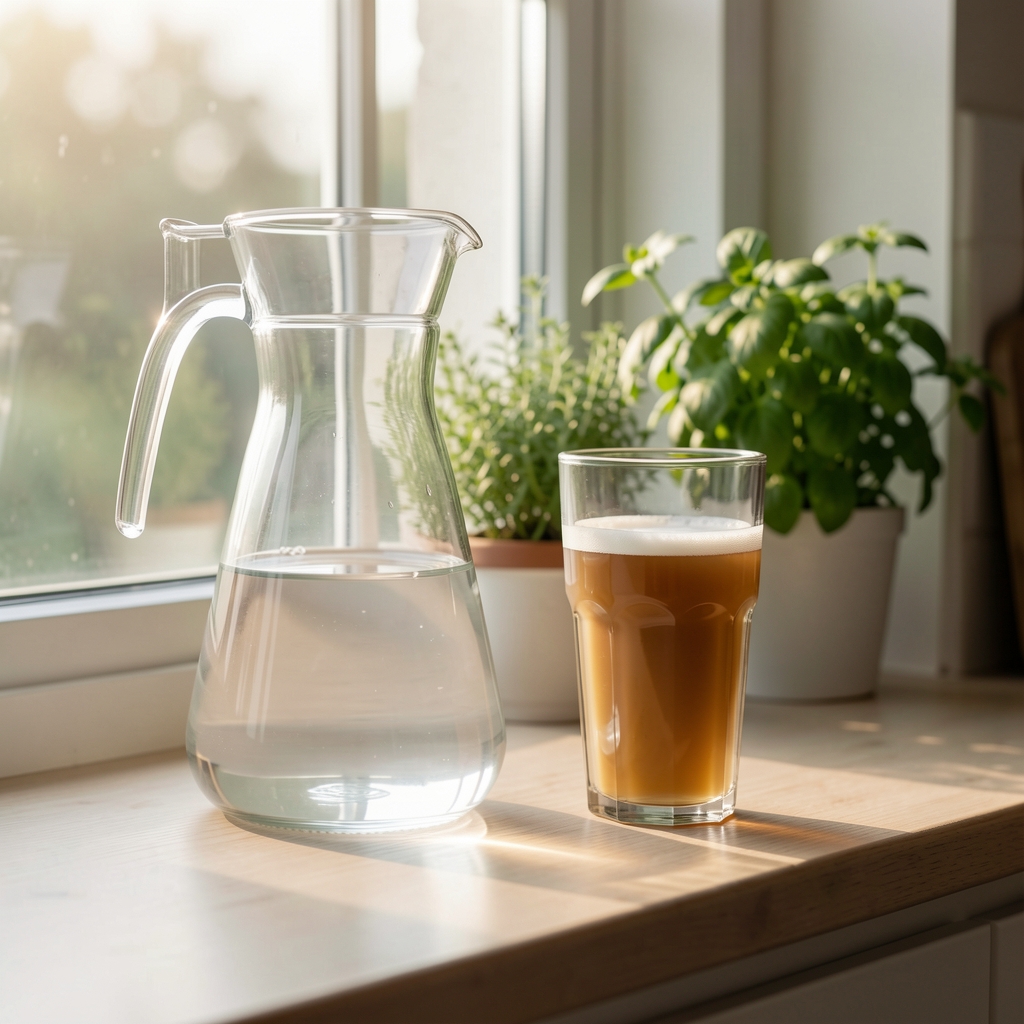
A meal-anchored hydration pattern — a glass of water at each meal and one between each meal interval — produces six structured opportunities across a standard waking day. At 250–350ml per glass, this approaches the target without requiring active monitoring. The kitchen routine becomes the structure, and the water consumption becomes incidental to it rather than a separate task.
Herbal infusions in the evening serve a dual function for many: they fulfil a portion of the hydration target while also functioning as a sensory anchor to a calm-evening routine. Chamomile, peppermint, and ginger infusions appear frequently in the reported evening habits of those tracking daily fluid intake — their caffeine-free profile makes them a practical choice after 17:00.
Gut-friendly recipes — those high in fermented elements and dietary fibre — place particular demands on the digestive system that adequate hydration supports. The well-documented interaction between fibre and fluid in the large intestine is a mechanical one: fibre requires water to form the appropriate consistency for efficient transit. Gut-friendly eating without adequate hydration produces the opposite of its intended effect.
Published research on the gut microbiome increasingly identifies hydration as an environmental factor in microbial balance — not a primary driver, but a background condition. The suggestion is not that drinking more water directly diversifies the microbiome, but that the intestinal environment that adequate hydration supports is more conducive to the fermentation processes that gut-friendly foods are intended to encourage.
For those specifically pursuing gut-friendly diets — high in fermented foods, diverse plant varieties, and prebiotic-rich vegetables — the hydration target should be treated as a floor rather than a ceiling. The structural demands of this eating pattern are higher than those of a lower-fibre diet, and the hydration requirement moves accordingly.
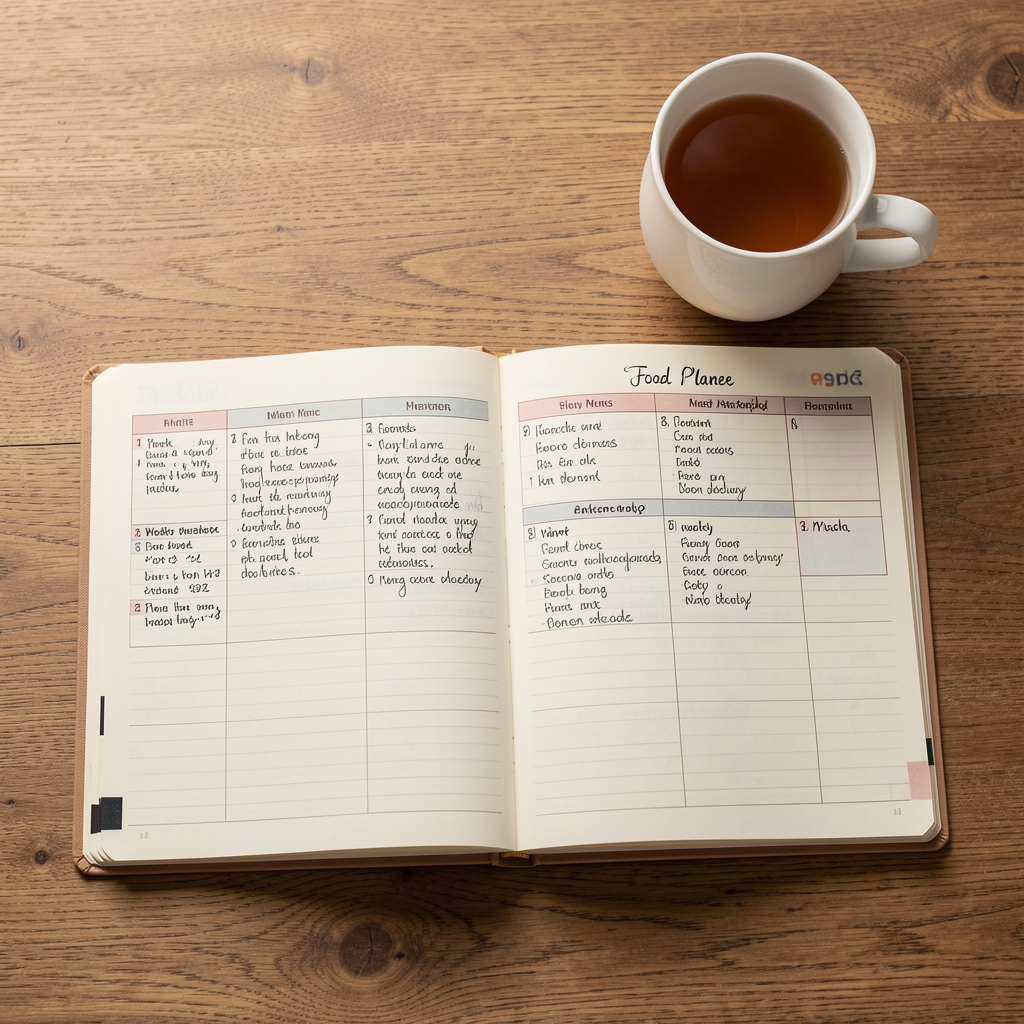
The food journal entry for water need not be complex. A simple tally — four columns, each representing a 500ml block, filled in as the day progresses — produces a reliable picture within two weeks of practice. Most practitioners of food journaling report that the act of recording, even approximately, produces a consistent upward adjustment in actual intake. The record itself is an intervention.
The most consistent predictor of adequate hydration in food journals reviewed editorially for this publication was not the target amount but the morning start: those who began the day with water before any other drink were consistently more likely to reach the daily target than those who did not. The morning glass of water — before coffee, before breakfast, before the screen — appears repeatedly in the recorded routines of people who describe their hydration habits as reliable.
This is, at its base, a structural note rather than a nutritional one: the first choice of the morning shapes the rhythm that follows. The water record, traced daily, is a map of that rhythm. It tells you less about individual glasses than about the pace at which a day of balanced nourishment unfolds.

Tobias Marsden is a contributing writer at Narbel Letters covering hydration research, active nutrition, and the everyday science of eating well. His work draws on published dietary literature and field observations from his London-based practice of food journaling.
More from this publication